The Philippines’ ASEAN Chairmanship in 2026 and China’s ASEAN Engagement

22 Agustus 2026
Executive Summary
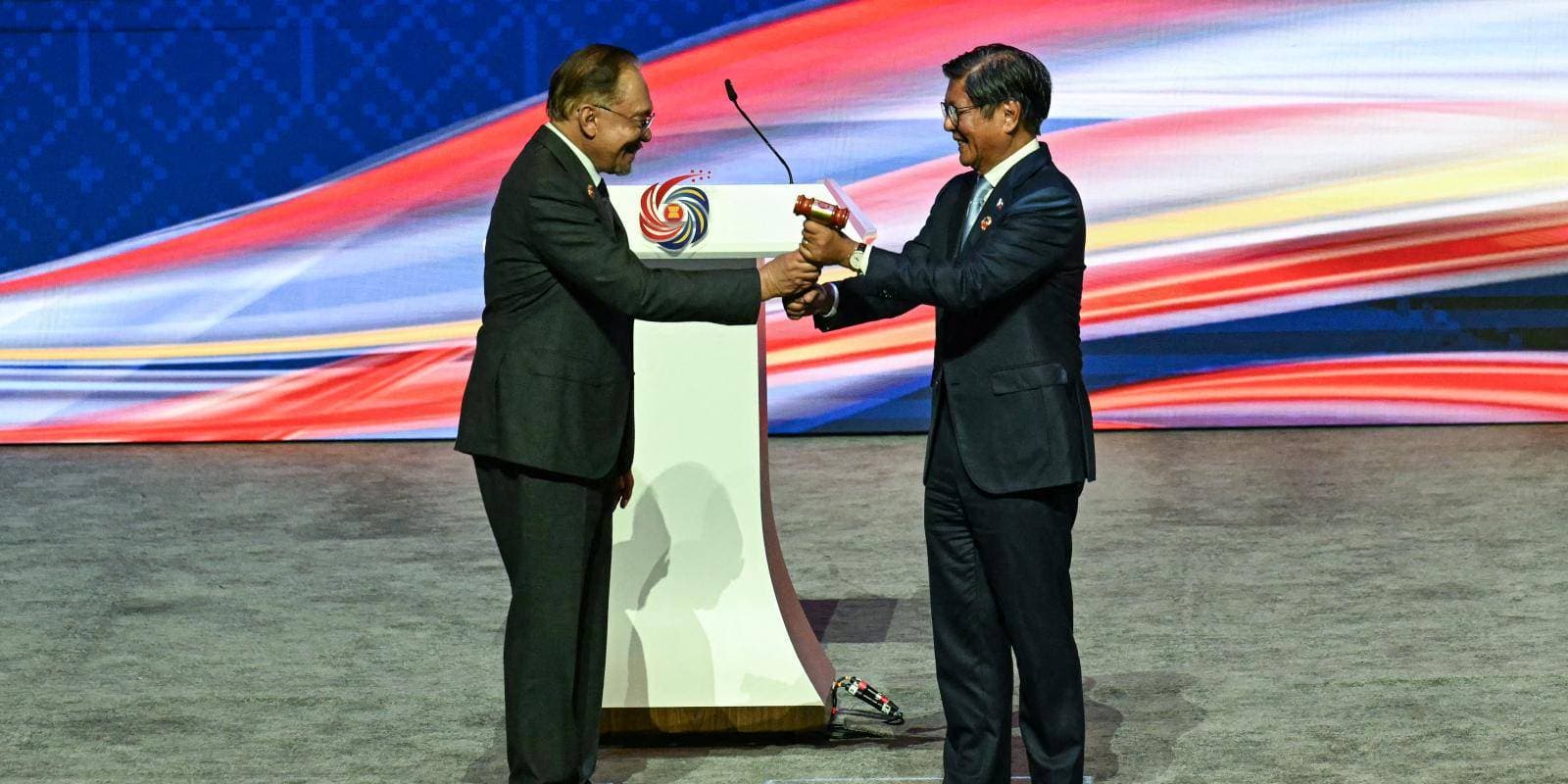
- The Philippines’ ASEAN chairmanship in 2026 will be a critical test of the bloc’s ability to preserve unity, maintain centrality, and navigate intensifying competition among major powers. Broader geopolitical instability, including tensions in the Middle East and concerns over global energy security, might complicate Manila’s leadership and increase pressure for pragmatic engagement with China, including proposals for joint exploration in disputed waters.
- As China increasingly projects itself as a stable and cooperative partner, ASEAN member states might face stronger incentives to pursue bilateral approaches rather than collective regional actions. Such dynamics risk weakening ASEAN cohesion and undermining its ability to address shared security challenges.
- To prevent fragmentation, Manila must use its chairmanship to reinforce ASEAN unity. This stance is pertinent to advancing the progress on matters between China and ASEAN, a key one being the South China Sea Code of Conduct (CoC). Close coordination with key member states, such as Indonesia and other middle powers, including Japan, will be essential to ensure balanced engagement within the bloc and with both the US and China.
Discourse over the Philippines’ appointment as ASEAN Chair in 2026 highlights several issues. One of the issues concerns with the increasingly hostile relationship with China over the territorial dispute in the South China Sea, which raises concern over how Manila will steer ASEAN through its fairly close economic partnership with the power. The second issue concerns with how the ASEAN Chairmanship itself has become a position of interest in Beijing’s eyes as such influence over a collective bloc serves as overhead over the region. More than once or twice, Beijing has been seen leveraging its close bilateral ties with whichever ASEAN member-state currently holding the rotating chairmanship – analysts say that such moves are made in order to advance its strategic interests in Southeast Asia and the Asia Pacific in general. The ASEAN Chairmanship has become strategically significant for external powers seeking to shape the regional agenda. This dynamic raises an imperative question: to what extent can China continue to shape ASEAN’s agenda when its current chair is the country with which it has the most strained relations in the region?
ASEAN member states have diverse interests. One country may behave differently from another based on a variety of economic, political, or geopolitical factors. China is then more likely to approach the region with a strategy that leverages bilateral ties and exploits consensus in order to combat any soft or hard balancing that the Philippines may be inclined to employ during its chairmanship. Rising tensions between the US and Iran may additionally offer China an opportunity to reshape and differentiate its global image through a charm offensive strategy.
China’s Bilateral Ties with ASEAN Member Countries
China’s relationship with differentiated ASEAN member-states resembles a puzzle: while cooperation continues to deepen, disputes such as those over the South China Sea simultaneously fuel mistrust among involved parties.1 Despite being ASEAN’s major trade, economic, and investment partner, China’s influence has manifested primarily through close bilateral relations with each member state rather than directly through the bloc itself. Beijing’s infrastructure financing under the BRI serves as a prime example of its attempts at bilateral leverage: projects with ASEAN member states like Indonesia, Cambodia, Thailand, Laos, Myanmar and Malaysia prove as manifestations of differentiated assertiveness in the region.2 Although BRI-funded infrastructure does align with the Masterplan on ASEAN Connectivity 2025, debates over how this investment can foster peace, or rather, conflict with China persist.3 Many Southeast Asian citizens remain wary of how Beijing may leverage these projects for political influence within the bloc.
The strategy of maintaining strong bilateral relationships with each individual ASEAN member country has proven effective for Beijing. The ASEAN Consensus often complicates regional decision-making since it requires a unanimous vote on matters where each country may have differing interests and views. Such a dynamic leaves room for foreign powers like China to leverage their bilateral relationships with each member state to undermine the consensus on regional issues they would otherwise have. Even a small number of sympathetic states can dilute collective positions; China has the power to shape outcomes covertly by fostering more cautious or neutral language on such sensitive issues.
Such dynamics contribute to the divergence in interests and priorities among ASEAN member-states on China-related issues. Countries may approach decisions more cautiously depending on their varying degrees of closeness to or existing tensions with China; advancing negotiations on the CoC under Manila’s leadership may sit at the top of the priority list for the Philippines thanks to its tense relationship with Beijing, but other countries might remain more tight-lipped about the matter should it risk straining relations with China as their top investor or source of other forms of aid.
Implications for ASEAN
China’s active bilateral engagement in Southeast Asia is reflected through ASEAN member-states’ increasingly divided positions, namely on political security issues. ISEAS’ 2026 State of Southeast Asia Survey reveals a split among the citizens of member-states over their preferred alignment with either the US or China: citizens hailing from the Philippines and Vietnam, two countries currently involved in sovereignty disputes with China over the Spratlys and Paracels, preferred aligning with the US in a 59% (Vietnam) and 79% (Philippines) landslide. Citizens from countries with fewer or less tense territorial disputes with China, like Indonesia, Singapore and Timor Leste tend to favour Beijing. Over 60% of the respondents in those countries identified China as their preferred partner between the two great powers. 68% of respondents in Malaysia believe that their country, though a claimant in the South China Sea dispute, should align with Beijing over the US.4 As long as the South China Sea remains contested, Beijing’s approach to each claimant state varies significantly. One example is that while China has been employing coercive tactics against the Philippines, it has demonstrated restraint toward Vietnam in contrast.5
Such differentiated treatment shapes how each state perceives the risks posed by China, which in turn influences its alignment preferences in regional political security decision-making, as seen in ISEAS’ findings on the average Malaysian perception of great-power alignment. Such a confused dynamic may weaken support for, and challenge, unity among ASEAN member states. It might also encourage claimant states to pursue bilateral resolutions with China rather than strengthening ASEAN-led mechanisms. This leads to a more muted, less proactive regional dynamic.
Cambodia, a country often associated with patron-client ties with China, shows a different pattern: more than 50% of respondents favour partnering with the US over China.6 This suggests that Cambodia’s engagement with China is mainly driven by economic interests, similar to Indonesia, Singapore, Malaysia, and Timor-Leste. While China’s economic influence remains attractive, ASEAN member states appear more divided on political security alignment. Recent discussions between the US and Indonesia over granting blanket access to US military aircraft over Indonesian airspace further indicate that Washington is still viewed as a key security partner, despite concerns over Indonesia’s sovereignty and national security.7
Manila’s Leadership Amidst Geopolitical Tensions
The Philippines stepped into the ASEAN chairmanship at a time of heightened and rather acute geopolitical tensions. The global energy crisis caused by the US-Iran War has rendered Southeast Asia, and namely Manila itself, extremely vulnerable. Maintaining energy security has become a priority for Manila, shifting its relationship with China as the two approach a joint energy exploration in the South China Sea.8
If this exploration takes place, the Philippines risks undermining the conclusion of the CoC under its ASEAN leadership. The project might push Manila to become energy-dependent on China, which could eventually legitimise China’s claim over the disputed islands and might force other claimant states to take similar action.9 This could weaken ASEAN’s centrality and unity in adopting the CoC. Moreover, China might not see the adoption of the CoC as a priority, as its position in the disputed islands continues to strengthen despite lacking support under international law.10
Heightened tensions in the Middle East have also provided opportunities for China to strengthen its charm offensive in Southeast Asia by building a global image as a trusted major power distinct from the US. According to the 2026 State of Southeast Asia Survey conducted by ISEAS, China remains the “undisputed partner of greatest strategic relevance” among ASEAN’s external dialogue partners, scoring 9.1 out of 11, compared with 8.6 for the US.11 Over the past few years, China has also positioned itself as an active conflict mediator, in contrast to the US, which has faced criticism for actions perceived to contravene international law in cases such as Venezuela and the Middle East.
As ASEAN navigates the growing rivalry among major powers, it faces a dual challenge: an increasingly adept China that projects a cooperative and appealing image and a recently declining image of the United States, at least among certain elite groups in some ASEAN countries, as indicated in the aforementioned ISEAS survey report. In this context, the Philippines’ chairmanship will serve as a critical test of ASEAN’s capacity to maintain strategic balance. Manila must not only address external pressures, such as energy crises, but also work to strengthen cohesion within ASEAN. It is vital to ensure that engagement with either major power does not come at the expense of regional unity or autonomy. The emphasis should be on advancing ASEAN’s agenda, particularly the adoption of the Code of Conduct (CoC), which could help mitigate potential tensions in the region.
Key regional players, such as Indonesia, must also work closely with the chair to preserve unity. Without such coordination, ASEAN risks fragmentation, with member states pulled in competing directions between Beijing and Washington. The recent official visit by the Philippines’ president, Ferdinand Marcos Jr., to Japan in May also underscored the essential role of other external powers, including Japan, in balancing the dynamics between the US and China in the region. As tensions between the two major powers continue to rise, East Asia’s middle and small powers have a growing stake and a timely opportunity to deepen and broaden their strategic engagement.
Ratih Kabinawa, Visiting Research Fellow, the Japan Institute of International Affairs and Research Fellow at the FSI
References:
- Forum Sinologi Indonesia, “Seminar Keketuan Filipina dan Diplomasi China di ASEAN,” 27 April 2026, available online at https://www.youtube.com/live/L5Q3wGNiKQ8 (Accessed 1 August 2026).
- Xue Gong, “China’s Belt and Road Initiative Financing in Southeast Asia,” Southeast Asian Affairs, (2020): 77-95. https://www.jstor.org/stable/26938885
- Selina Ho, “Can the Belt and Road Initiative Bring Peace to China and Asean?” In: K. Mahbubani, V.K. Chandra, & K. Tang, (eds) Can Asians Think of Peace? (Singapore: Springer, 2025).
- J. Lin, et al., The State of Southeast Asia: 2026 Survey Report, (Singapore: ISEAS–Yusof Ishak Institute, 2026).
- J.C. Velasco, “Coercion and Restraint in the South China Sea: China’s Differentiated Assertiveness towards the Philippines and Vietnam,” Journal of Current Southeast Asian Affairs, (2026): 1-23. https://doi.org/10.1177/18681034261427457
- Lin et al., The State of Southeast Asia.
- Aristyo Darmawan, “Indonesia shouldn’t give blanket airspace access to the US,” The Strategist, 15 April 2026, available online at https://www.aspistrategist.org.au/indonesia-shouldnt-give-blanket-airspace-access-to-the-us/ (Accessed 1 August 2026).
- Jean Mangaluz, “Marcos: Reset in China ties ‘happening,’ energy cooperation under review,” Philstar, 25 March 2026, available online at https://www.philstar.com/headlines/2026/03/25/2516718/marcos-reset-china-ties-happening-energy-cooperation-under-review (Accessed 1 August 2026).
- Felix K. Chang, “Running Out of Gas: Philippine Energy Security and the South China Sea,”Foreign Policy Research Institute, 6 September 2019, available online at https://www.fpri.org/article/2019/09/running-out-of-gas-philippine-energy-security-and-the-south-china-sea/#:~:text=A%20successful%20deal%20could%20also,new%20sources%20of%20energy%20abroad. (Accessed 1 August 2026).
- Forum Sinologi Indonesia, “Seminar Keketuan Filipina”
- Lin et al., The State of Southeast Asia, p.5.